Compression wear guide for POTS

Compressionwear is a great tool and aid on the long list of lifestyle adjustments for people living with POTS (dysautonomia). Dysautonomia (more commonly known as POTS) is a common comorbidity in several syndromes, such as Ehlers-Danlos Syndrome, Hypermobility spectrum disorder, Long Covid, ME/Chronic Fatigue Syndrome, etc.
People living with these conditions tend to have blood pooling, a phenomenon in which circulating blood pools in the calves, feet, and abdominal area. A non-pharmaceutical commonly recommended way to help with this condition is the use of compression wear, although the type and level of compression that works best can vary from person to person. Navigating the compression wear world can be like diving into a bit of a deep and colourful ocean.
This article aims to provide non-medical, educational advice when determining which type of compression wear suits you best. The comments below are based on personal experience, research, and feedback from other patients.
Considerations at the time of buying
If you're considering compression for the first time, particularly if you have another medical condition or have been advised to avoid compression, check with your healthcare professional first.
The best compression is the one you can tolerate: As one of my colleagues said at the last conference I attended: the most useful compression may be the compression you can comfortably tolerate and use consistently. There is no perfect scenario for compression; just try to find what makes you feel comfortable and helps to improve your symptoms, even if it's a bit. Unfortunately, there's not a "cure" per se for dysautonomia, for which every lifestyle change and every medication you are given is a single step into improving your life quality.

Calves/feet compression plus abdominal compression are highly recommended: as mentioned before, with this condition, blood pools in both legs and abdomen. Lots of people would imagine that pooling would only appear at the tail end of your body, but it actually can be on both sides. So using compression on both areas, if possible, can be of great help.
Abdominal compression just needs to reach before the ribs: among all compression wear brands, I have found some leggings finish at belly button height and some just before the ribcage. My advice based on my personal experience is to look for the ones that reach a bit higher up, near the ribcage, as pressure against the belly button area can create discomfort in the stomach, particularly for people who also experience gastrointestinal symptoms.
Sensory overwhelming aspects: Compression against your belly button is one of the things you want to avoid, but also some brands tend to feel too tight and create an all-over sensory overwhelming experience that is not worth the pain.
Compression levels: Compression garments are available in a range of pressure levels. The products reviewed on this blog are generally in the lower-to-moderate range, around 10–20 mmHg or 20–30 mmHg. Higher levels of compression are also available and may be used for conditions such as chronic venous disease or lymphoedema, often under the guidance of a healthcare professional.
Review (no economic attachments)
The comments below are based on my personal experience, research, and feedback from other patients. They are not medical recommendations, and what works well for one person may not work well for another.
My pick on leggings:

Supacore:
Pros: They are of great quality, providing not only compression, but stability for the Sacro-Iliac Joint. They have a great variety of models and colours, and they are high-rise (near ribcage). No personal experience, but has been recommended by patients and friends.
Cons: A bit on the pricey side.
Korform:
Pros: In my experience, they are a more affordable option, with a similar design to Supacore. While providing good compression, they are not sensory overwhelming. Also, they aren't annoying in the tummy area, as they are high-rise (near ribcage).
Cons: Not much variety. Unsure about the quality compared to Supacore.
Emamaco Postnatal:
Pros: In my experience, they have good abdominal compression and are quite comfortable on the abdominal area as they are also high-rise (near ribcage). They are not sensory overwhelming. There's not a great variety, but there is a model with pockets, which is a win. Accessible price if you need to have more than 1-2 pairs.
Cons: I personally find them not super flattering on the tummy.
My pick on socks:

Nusoothe:
Pros: Has a good variety of socks. The ones without toes help to cool down your feet while having compression during summer. I have definitely enjoyed that bit. Ankle versions are also great for summer and going to the beach.
Cons: The material can be quite synthetic. The top can be a bit tight if you are looking for non-binding socks. Haven't tried the leggings.
Funky socks:
Pros: They are my favourite socks. They have a great variety of colours, lengths and materials. They come in synthetic or bamboo-non-binding materials. Length can be ankle, crew or knee-high. Colours are wonderful, as they go from really fun and creative patterns to strong colours, to pastels and neutrals. They are not too expensive and always have some promotion going on, so the more you buy, the cheaper the pair gets. Also, their delivery service is super fast and efficient.
My pick on Abdominal compression:
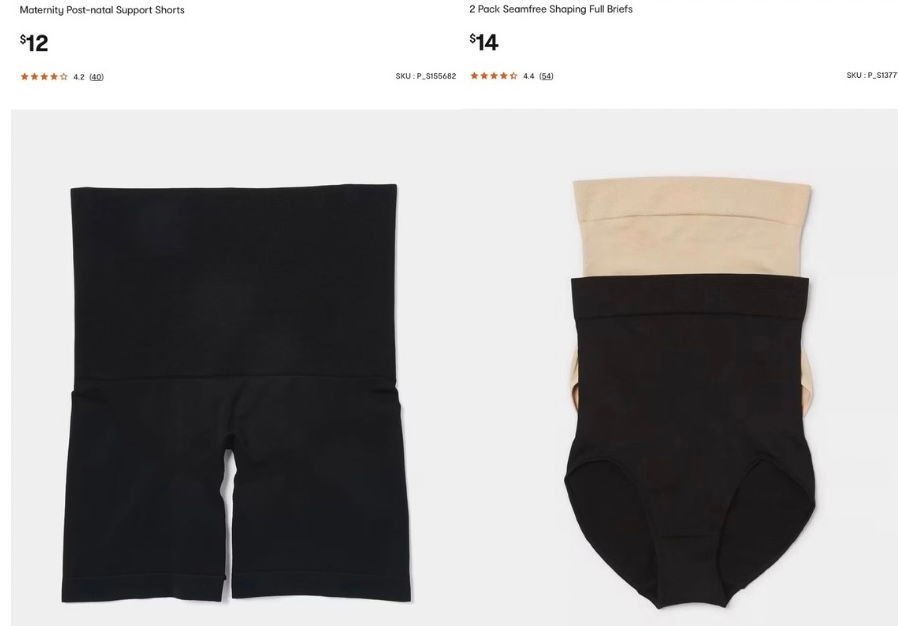
Postnatal shorts Kmart:
Pros: a really cheap ($12) option to dive into compression. High-rise shorts, not too sensory overwhelming, and don't have such a synthetic feeling. They are available up to size 20.
Cons: They tend to roll up a bit.
Shaping wear Kmart:
Pros: They are in the same price bracket and are good for a trial run into the compression world.
Cons: A less compressive option, but can be used layered.
Comments